
Event: October 16–17, 2026
Venue: Manila
ICDALESH-2026
RBC Partners with IFERP for International Academic Conference in Manila
Royal British College, Inc. and IFERP convene scholars across arts, linguistics, education, social sciences, and humanities
By the Academic Affairs Desk · Manila · October 16–17, 2026

Royal British College and IFERP bring scholars together in Manila for ICDALESH-2026, highlighting collaboration, research exchange, and shared academic development.
MANILA, Philippines — Royal British College, Inc. (RBC) established an academic partnership with the Institute for Educational Research and Publication (IFERP) for the 2nd International Conference on Converging Disciplines in Arts, Linguistics, Education, Social Sciences and Humanities (ICDALESH-2026). The conference was scheduled for October 16–17, 2026, in Manila. The collaboration highlights the importance of academic cooperation and the exchange of research-based knowledge. It also connects the institution with an international academic initiative covering several fields of study. The partnership reflects RBC's participation in activities that promote research and educational development.
ICDALESH-2026 focuses on disciplines that contribute to the understanding of language, culture, education, and society. These fields provide opportunities for researchers and educators to examine issues from different academic perspectives. Conferences create platforms for presenting research findings and discussing emerging developments. Participants can also exchange ideas about challenges and opportunities within their respective disciplines. Such academic engagement supports the continued development of knowledge and research.
The partnership with IFERP establishes a connection between RBC and an organization involved in academic research and publication. Institutional partnerships can encourage participation in scholarly activities and professional learning opportunities. They can also help strengthen communication among educators, researchers, and academic institutions. These connections support the exchange of practices and perspectives across educational settings. The collaboration emphasizes the role of institutional cooperation in advancing academic work.
“The collaboration emphasizes the role of institutional cooperation in advancing academic work.”
Research and publication remain important components of higher education. Research findings can help educators examine existing practices and identify areas that require improvement. Academic conferences provide opportunities to discuss how these findings relate to educational and social concerns. They also encourage participants to consider questions that require further investigation. Through research engagement, educational institutions can strengthen their commitment to evidence-informed learning and development.
The conference's interdisciplinary focus also reflects the relationship among different fields of knowledge. Issues affecting communities often involve cultural, linguistic, educational, and social factors. Bringing these disciplines together can encourage more informed discussions of complex concerns. Researchers can identify connections between their findings and the work of professionals in other fields. This exchange can contribute to new research directions and collaborative academic projects.
Conference Brief
- Event: ICDALESH-2026
- Dates: October 16–17, 2026
- Venue: Manila, Philippines
- Partners: Royal British College, Inc. & IFERP
- Fields: Arts, Linguistics, Education, Social Sciences, Humanities
- Goals: SDG 4, SDG 9, SDG 17
The initiative supports the United Nations Sustainable Development Goals, particularly SDG 4: Quality Education, SDG 9: Industry, Innovation and Infrastructure, and SDG 17: Partnerships for the Goals. It promotes SDG 4 by encouraging academic engagement and the exchange of knowledge. It relates to SDG 9 through its emphasis on research, innovation, and scholarly development. The partnership also reflects SDG 17 by connecting RBC with IFERP through academic cooperation. Its broader contribution to educational development supports efforts to expand knowledge and opportunities.
RBC's partnership for ICDALESH-2026 highlights its engagement in academic collaboration and research-oriented activities. The conference provides a setting for scholarly discussions across the arts, linguistics, education, social sciences, and humanities. The long-term benefits of such partnerships depend on continued engagement and the practical application of shared knowledge. Sustained cooperation can help encourage research participation and strengthen academic networks. Through this initiative, RBC supports the broader pursuit of quality education and institutional development.
In Pictures: ICDALESH-2026


A formal conference moment reflects the shared commitment to academic participation and professional growth.
Conference materials and discussion create space for scholars to share findings across disciplines.


Dr. Gwendolyn K. Wong welcomes IFERP participants and highlights Royal British College’s commitment to international academic collaboration and shared learning.
Professionals gather to strengthen dialogue, collaboration, and institutional learning.
RBC and IFERP connect people and ideas through research, publication, and cooperation.
❧ ✦ ☙
Education
Lipa City, Philippines
Community & Partnerships
EBA Scholarship Program
RBC Joins Lipa City Scholarship Partnership to Expand Access to Education
Royal British College, Inc. joins the Pamahalaang Lungsod ng Lipa and partner institutions in signing the Memorandum of Agreement
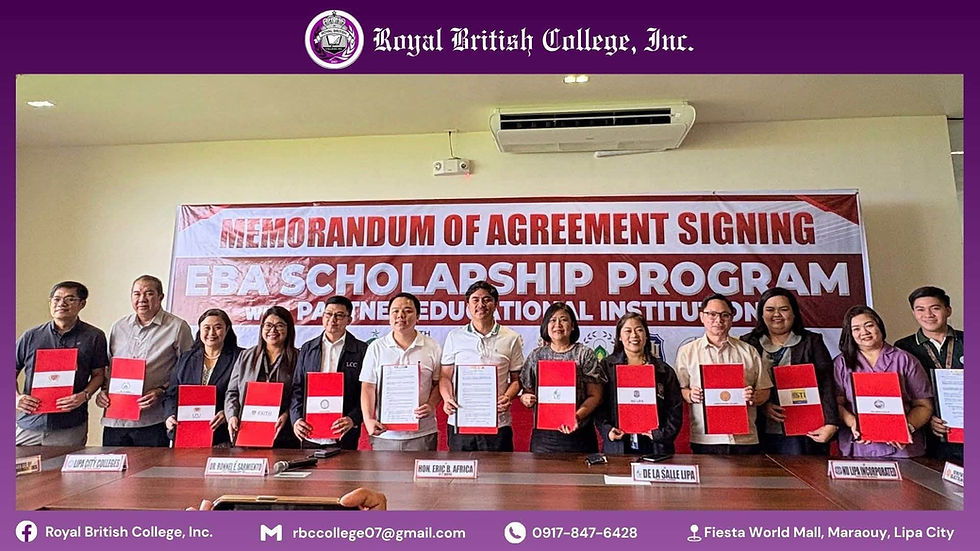
LIPA CITY, Philippines — Royal British College, Inc. (RBC) joined the Pamahalaang Lungsod ng Lipa and partner educational institutions in the signing of the Memorandum of Agreement (MOA) for the EBA Scholarship Program. The initiative seeks to expand educational opportunities for students through cooperation between the local government and participating institutions. The partnership highlights the importance of providing learners with access to educational support. It also reflects a shared commitment to making education more accessible to qualified students. The MOA signing marks a collaborative effort to support the academic aspirations of the community.
“The partnership places educational access at the center of a shared effort to support students and their future aspirations.”
Scholarship Facts
- Program: EBA Scholarship Program
- Agreement: Memorandum of Agreement (MOA)
- Location: Lipa City, Philippines
- Partners: Pamahalaang Lungsod ng Lipa, Royal British College, Inc. (RBC), and partner educational institutions
- Aim: Expand educational opportunities for qualified students
- SDGs: 1 No Poverty, 4 Quality Education, 10 Reduced Inequalities, 17 Partnerships for the Goals

Representatives gather in Lipa City as Royal British College helps formalize a partnership to expand access to education.

An RBC representative holds the scholarship agreement folder, reflecting a shared commitment to expanding educational access in Lipa City.

Representatives stand together during the EBA Scholarship Program MOA signing, showing a shared commitment to helping students pursue education in Lipa City.
For RBC, joining the agreement reflects its participation in initiatives that promote student access to education. The collaboration reinforces the importance of connecting academic institutions with community-based support programs. Scholarship opportunities can help students pursue their chosen fields and prepare for future employment. Educational support also contributes to the development of skills and knowledge needed in the workforce. The initiative highlights the role of partnerships in supporting students throughout their academic journey.
The scholarship program addresses the need to make education more attainable for students facing financial challenges. Educational expenses can affect a student's ability to enroll, continue studying, or complete a degree. Scholarship initiatives help create opportunities for learners who need assistance in pursuing their academic goals. Through such programs, students can receive support that helps them focus on their education. The initiative reinforces the role of educational assistance in promoting student development.
The program is aligned with several United Nations Sustainable Development Goals (SDGs), particularly SDG 1: No Poverty, SDG 4: Quality Education, SDG 10: Reduced Inequalities, and SDG 17: Partnerships for the Goals. It relates to SDG 1 by addressing financial barriers that can limit educational access. It supports SDG 4 through efforts to expand learning opportunities and promote inclusive education. The initiative also reflects SDG 10 by encouraging broader access to educational assistance. Its partnership among local government and educational institutions demonstrates the importance of cooperation under SDG 17.
Furthermore, the participation of RBC highlights the importance of collaboration among educational institutions and local governments. Partnerships allow participating organizations to coordinate their efforts and identify opportunities to support learners. Formal agreements also establish a foundation for cooperation in implementing educational initiatives. These arrangements can help align scholarship programs with the needs of the student community. The partnership demonstrates how institutions can work together toward a common educational objective.
Through the EBA Scholarship Program MOA signing, RBC joined a collaborative effort to support educational accessibility in Lipa City. The initiative underscores the importance of partnerships in addressing challenges that affect students' educational opportunities. Its effectiveness will depend on the implementation of the agreement and the support provided to eligible learners. Continued coordination among the participating institutions can help sustain the program's objectives. The partnership places educational access at the center of a shared effort to support students and their future aspirations.
Local government participation is also significant in expanding access to educational resources. Working with schools enables local authorities to connect educational initiatives with the communities they serve. Such cooperation can strengthen the delivery of assistance to eligible students. It also encourages shared responsibility in addressing barriers to education. These efforts support the development of a more inclusive educational environment in Lipa City.


Representatives mark the EBA Scholarship Program agreement in Lipa City, creating new opportunities for students.
The EBA Scholarship Program agreement reflects RBC partnership with local leaders to open more pathways for students in Lipa City.
❧ ✦ ☙
Education
Family & School
Parent Partnership
RBC Holds Parents’ Meeting to Strengthen Family Support
Strong Hearts, Strong Homes: Building Resilient Families in Challenging Times

LIPA CITY, Philippines — Royal British College, Inc. (RBC) held a parents' meeting titled “Strong Hearts, Strong Homes: Building Resilient Families in Challenging Times” on September 12, 2026, at the RBC Academic Building. The meeting addressed school-related incidents and highlighted the role of parents in supporting students. It emphasized communication and cooperation between families and the school community. The gathering also focused on strengthening family relationships during challenging situations. The activity underscored the importance of shared responsibility in promoting student welfare.
The meeting centered on the role of families in helping students navigate academic and personal challenges. Parents play an important part in understanding their children's experiences and responding to their concerns. Open communication at home can help identify misunderstandings and difficulties at an early stage. A supportive family environment can also encourage students to discuss problems and seek appropriate assistance. These practices contribute to stronger relationships between parents and their children.
School-related incidents also require appropriate communication between families and school personnel. Discussing concerns allows parents and educators to understand the circumstances surrounding a situation. Clear communication can help prevent misunderstandings and identify appropriate responses. It also encourages accountability among the individuals involved. Cooperation between the home and school can support fair and responsible handling of student concerns.
Timeline
- Sept. 12, 2026 — Parents' meeting held
- Venue — RBC Academic Building
- Theme — Strong Hearts, Strong Homes
- Focus — School concerns & family support


Family resilience was another central theme of the meeting. Families can respond to difficulties more effectively when members communicate openly and support one another. Parents can help children manage challenges by listening to their concerns and providing consistent guidance. Schools can reinforce these efforts through student support services and communication with families. This shared approach can help create a more stable environment for students.
Parental involvement also contributes to students' educational experiences. Parents who participate in school activities gain opportunities to understand school expectations and student responsibilities. Their involvement can help reinforce appropriate behavior and respect for school policies. Regular communication also allows parents and teachers to discuss students' progress and concerns. These efforts strengthen the relationship between families and educational institutions.
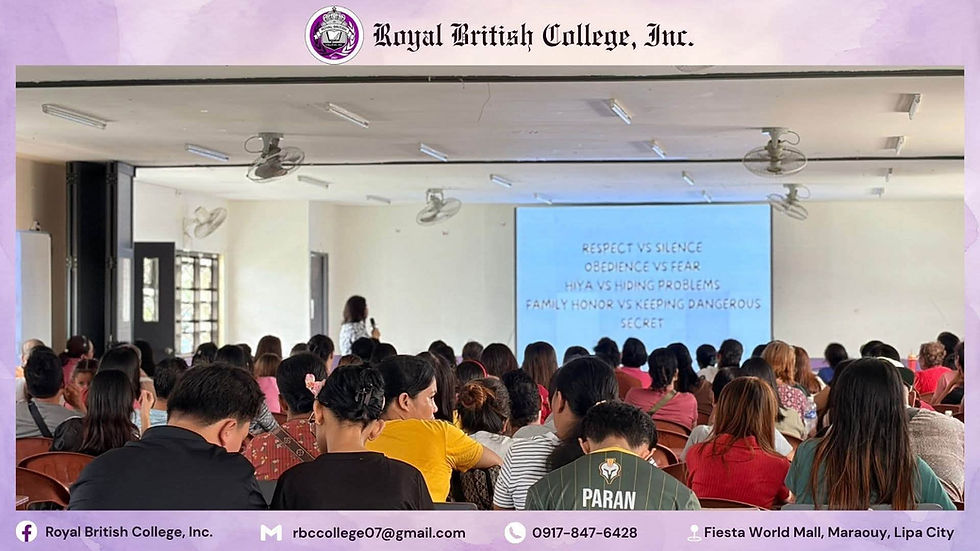
Through the parents' meeting, RBC highlighted the importance of cooperation in addressing school concerns and supporting students. The activity reinforced the role of parents as partners in the educational process. Continued communication can help families and school personnel respond more effectively to students' needs. Sustained parental involvement can also strengthen support systems within the school community. The meeting emphasized that student development requires cooperation between the home and the institution.
The activity supports several United Nations Sustainable Development Goals, including SDG 3: Good Health and Well-Being, SDG 4: Quality Education, SDG 16: Peace, Justice and Strong Institutions, and SDG 17: Partnerships for the Goals. It relates to SDG 3 through its emphasis on supportive family relationships and student welfare. It advances SDG 4 by encouraging cooperation between parents and the school. The focus on constructive communication and responsible responses to school concerns also relates to SDG 16. The partnership between families and school personnel reflects SDG 17, while inclusive access to support remains relevant to SDG 1: No Poverty.
❧ ✦ ☙
Campus News · Safety & Preparedness
RBC Participates in Nationwide School Safety Drill to Strengthen Emergency Preparedness

LIPA CITY, Philippines — Royal British College, Inc. (RBC) participated in the Nationwide Simultaneous School Safety Drill in line with the safety initiatives of the Schools Division of Lipa City. The activity aimed to strengthen emergency preparedness among students, teachers, and school personnel. It emphasized the importance of following established safety procedures during emergency situations. The exercise also highlighted the need for coordination within the school community. RBC's participation reinforced the importance of preparedness in maintaining a safe learning environment.
School safety drills allow students and personnel to practice responding to potential emergencies. Participants can become familiar with evacuation procedures and designated safety routes. These exercises also help reinforce the importance of following instructions from authorized personnel. Regular practice can reduce confusion and encourage organized responses during emergencies. Such activities form part of efforts to protect lives and promote school safety.
Teachers and school personnel have important responsibilities during emergency drills. They help guide students, communicate instructions, and maintain order throughout the exercise. Students are expected to listen carefully and follow established procedures. School administrators also play a role in coordinating safety arrangements and reviewing emergency plans. Cooperation among these groups contributes to a more organized response.


Preparedness also depends on clear communication and an understanding of individual responsibilities. Emergency instructions must be communicated in a way that participants can understand and follow. Familiarity with evacuation routes can help prevent unnecessary confusion during an emergency. Practicing these procedures also encourages students to remain attentive and cooperate with others. These measures strengthen awareness of appropriate emergency responses.
The drill highlights the importance of preparing educational institutions for hazards that could disrupt school operations. Schools need procedures that address possible emergencies and protect the people within their facilities. Regular exercises can help identify areas where additional training or adjustments are needed. Reviewing these procedures can improve coordination among school personnel. Preparedness activities therefore contribute to a broader culture of safety and resilience.


The initiative aligns with several United Nations Sustainable Development Goals, including SDG 3: Good Health and Well-Being, SDG 4: Quality Education, SDG 11: Sustainable Cities and Communities, SDG 13: Climate Action, and SDG 17: Partnerships for the Goals. It supports SDG 3 by promoting practices intended to protect lives and reduce risks. It relates to SDG 4 through efforts to maintain a safer learning environment. Its focus on preparedness and resilience connects with SDG 11 and, where relevant to climate-related hazards, SDG 13. Coordination with the Schools Division of Lipa City also reflects SDG 17.
RBC's participation in the Nationwide Simultaneous School Safety Drill highlighted the importance of preparation and cooperation in emergency response. The activity provided an opportunity for the school community to reinforce established safety procedures. Continued drills and regular reviews can help strengthen awareness of emergency protocols. School personnel and students share responsibility for following safety instructions and participating in preparedness activities. These efforts support the goal of maintaining a safer and more resilient educational environment.
❧ ✦ ☙
Campus News · Guidance and Counseling
September 5, 2026 · The Mind Museum, Taguig
RBC Guidance and Counseling/Care Center Joins Parenting Academy on Children's Mental Health
“Let's Protect Our Children's Mental Health!” puts violence prevention and child welfare in focus
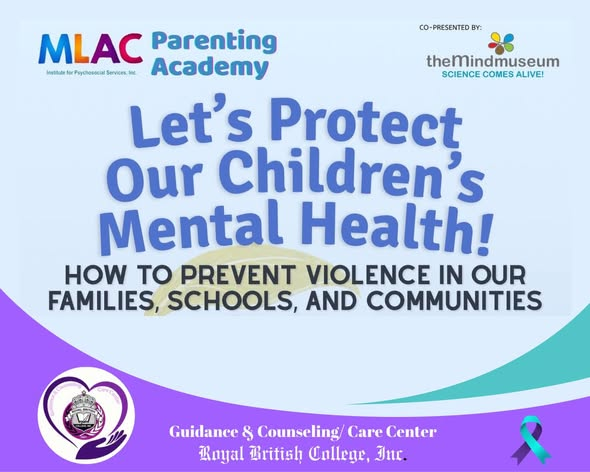
TAGUIG CITY, Philippines — The Guidance and Counseling/Care Center of Royal British College, Inc. (RBC) participated in the MLAC Parenting Academy titled “Let's Protect Our Children's Mental Health!” on September 5, 2026, at The Mind Museum in Bonifacio Global City, Taguig. The activity focused on violence prevention and the protection of children's mental health. It highlighted the responsibilities of parents, educators, and communities in promoting child welfare. The participation connected RBC's student support services with an initiative focused on children's protection and development. The activity also emphasized the importance of creating safe and supportive environments for young people.
Violence prevention was another focus of the parenting academy. Exposure to violence can affect children's safety, relationships, and well-being. Families and schools can help prevent harmful situations by promoting respect and appropriate ways of resolving conflicts. Adults responsible for children also need to respond seriously to concerns involving possible abuse or violence. Appropriate reporting and support procedures are important in protecting children from harm.

The activity also highlighted the role of parents in promoting children's mental health. Listening to children and maintaining open communication can help families understand their experiences. Parents can provide guidance by responding to concerns with patience and taking children's experiences seriously. When concerns require additional support, families can seek assistance from qualified professionals. These practices can help strengthen relationships and promote children's well-being.
“Child protection requires cooperation among families, educational institutions, and communities.”
Children's mental health is an important part of their development and educational experience. Emotional and psychological concerns can affect relationships, behavior, and participation in school activities. Children need supportive environments where they can express concerns and ask for assistance. Parents and educators play important roles in recognizing signs of distress and responding appropriately. Mental health awareness can help communities better understand the needs of children.

School guidance services also contribute to the protection and development of students. Guidance personnel can help students address personal, social, and school-related concerns through appropriate support services. Coordination with parents can help identify concerns and determine suitable ways to assist learners. Confidentiality and responsible communication are important when handling sensitive student matters. Participation in programs focused on child welfare reinforces the importance of maintaining supportive educational environments.


The parenting academy aligns with several United Nations Sustainable Development Goals, including SDG 3: Good Health and Well-Being, SDG 4: Quality Education, SDG 5: Gender Equality, SDG 16: Peace, Justice and Strong Institutions, and SDG 17: Partnerships for the Goals. It supports SDG 3 through its focus on mental health awareness and children's welfare. It relates to SDG 4 by recognizing the importance of safe and supportive learning environments. Its focus on violence prevention and child protection also connects with SDG 5 and SDG 16, while cooperation among families, schools, and relevant organizations reflects SDG 17. The broader goal of ensuring access to support for children and families also relates to SDG 1: No Poverty.
RBC's participation in the MLAC Parenting Academy highlighted the importance of protecting children's mental health and preventing violence. The activity emphasized that child protection requires cooperation among families, educational institutions, and communities. Continued awareness initiatives can help parents and educators recognize concerns and respond appropriately. Access to suitable guidance and professional support also remains important in addressing children's needs. Through its student support services, RBC reinforces the importance of promoting children's safety, well-being, and holistic development.
❧ ✦ ☙
RESEARCH & INDUSTRY EDITION
LIPA CITY, BATANGAS · 2026
RBC Joins Mandarin Oriental Career Summit and Leadership Panel to Explore Global Hospitality Opportunities
CAREERS · HOSPITALITY · PARTNERSHIPS

Royal British College representatives at the Mandarin Oriental, Makati Career Summit and Leadership Panel 2026, Solano Hotel, Lipa City.
LIPA CITY, Batangas — Royal British College, Inc. (RBC) participated in the Mandarin Oriental, Makati Career Summit and Leadership Panel 2026 held at Solano Hotel, Lipa City, Batangas. The event brought together representatives from the hospitality industry to discuss career development, leadership, and employment opportunities. RBC's participation provided an opportunity to connect with industry leaders and explore potential career pathways for its students. Discussions also focused on international internship opportunities and professional development within the hospitality sector. The activity highlighted the importance of strengthening connections between academic institutions and industry partners.
Leadership discussions formed another important part of the event. The panel highlighted the role of leadership in maintaining service quality and organizational effectiveness within hospitality establishments. Students pursuing careers in tourism and hospitality can benefit from understanding how professionals manage teams, address challenges, and make strategic decisions. These insights provide a clearer picture of the responsibilities associated with supervisory and managerial positions. The discussions also reinforced the importance of developing leadership skills alongside technical competencies.
“Such engagements help connect academic preparation with actual workplace expectations.”
RBC's participation also opened opportunities to explore international internships and potential career pathways for students. Overseas industry exposure can help learners understand different workplace environments and service standards. Internship opportunities provide practical experience that complements the knowledge gained through classroom instruction. They can also help students develop communication, adaptability, and professional skills. These experiences are particularly relevant to students preparing for careers in tourism, hospitality, and related industries.

Industry representatives shared perspectives on the qualifications, competencies, and workplace expectations required in the hospitality field.
The collaboration between educational institutions and hospitality establishments plays an important role in workforce preparation. Industry partnerships can help align academic programs with current employment requirements. They also create opportunities for students to gain exposure to professional environments before entering the workforce. Through these connections, educational institutions can better understand emerging industry trends and expectations. The summit demonstrated the importance of maintaining active relationships between schools and industry stakeholders.
The initiative supports several United Nations Sustainable Development Goals (SDGs), particularly SDG 4: Quality Education, SDG 8: Decent Work and Economic Growth, SDG 9: Industry, Innovation and Infrastructure, and SDG 17: Partnerships for the Goals. It relates to SDG 4 by promoting learning opportunities connected to industry practices. It advances SDG 8 through its emphasis on career preparation, employment, and professional development. The exploration of industry opportunities also supports SDG 9, while collaboration between RBC and hospitality stakeholders reflects SDG 17. Its broader contribution to career accessibility and economic opportunities is also connected to SDG 1: No Poverty.
Through its participation in the career summit and leadership panel, RBC reinforced the importance of industry exposure in preparing students for professional careers. The activity provided opportunities to establish connections and explore possible internship and employment pathways. Continued engagement with hospitality industry partners can help strengthen the relevance of academic preparation. These partnerships can also support students in developing the competencies needed in local and international workplaces. RBC's participation reflects its commitment to connecting education with career opportunities and industry development.
The career summit provided a platform for participants to gain a better understanding of the hospitality industry's professional landscape. Industry representatives shared perspectives on the qualifications, competencies, and workplace expectations required in the field. These discussions helped emphasize the importance of preparing students for the demands of a competitive employment environment. Exposure to industry practices also allows educational institutions to identify skills that need further development. Such engagements help connect academic preparation with actual workplace expectations.
At a Glance
- Event: Mandarin Oriental, Makati Career Summit and Leadership Panel 2026
- Venue: Solano Hotel, Lipa City, Batangas
- Focus: Careers, leadership, international internships
- SDGs: 1, 4, 8, 9 and 17

Royal British College representatives featured in an official career summit banner.
❧ ✦ ☙
Research & Institutional News
July 25, 2026 · Malaysia
Leadership Recognition
RBC Founder Dr. Lorenzo Ku Receives Iconic Visionary Award in Malaysia
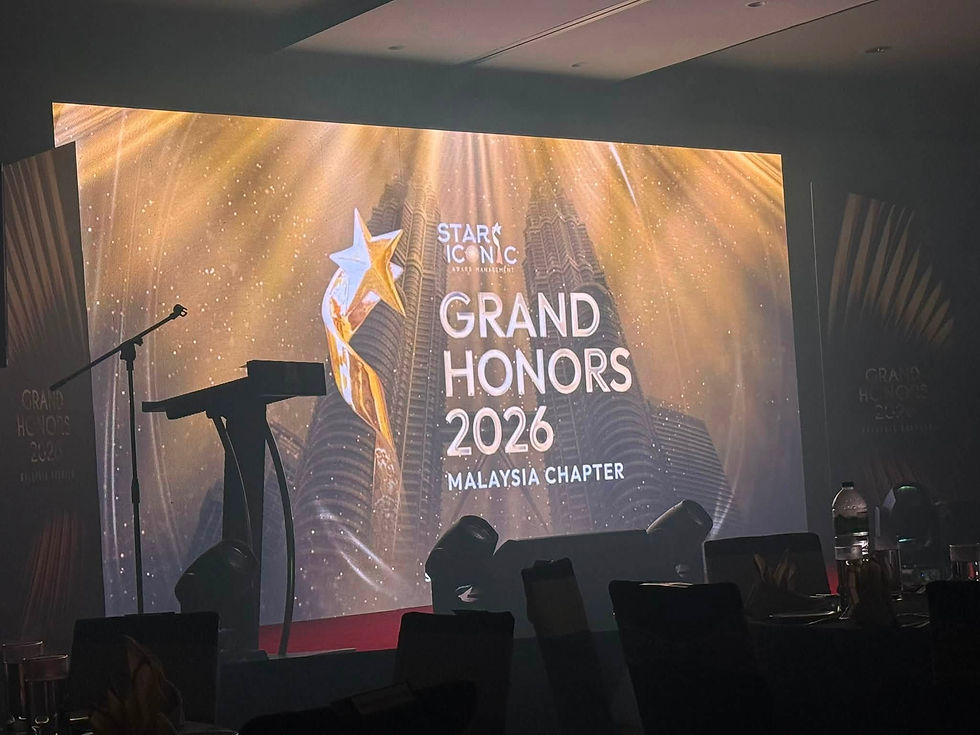
Royal British College is represented at the international recognition ceremony in Malaysia.
MALAYSIA — Royal British College, Inc. (RBC) celebrated the recognition of its Founder and Chairman, Dr. Lorenzo Ku, who received the prestigious Iconic Visionary Award on July 25, 2026, in Malaysia. The recognition highlighted his contributions and leadership in the field of education and institutional development. The award was accepted on his behalf by School President Dr. Gwendolyn Ku Wong. The achievement marked a significant occasion for the institution and its academic community. It also brought recognition to the leadership behind RBC's continuing educational initiatives.
As the institution's founder and chairman, Dr. Ku has been recognized by RBC as an important figure in its institutional history. His leadership is associated with the establishment and development of the college. The recognition reflects the importance of visionary leadership in guiding educational institutions toward their goals. Institutional development requires consistent direction, planning, and commitment to educational priorities. The award provided an opportunity to recognize his contributions to the institution.
The Iconic Visionary Award also highlights the value of leadership in promoting progress and innovation. Individuals recognized for visionary leadership are often associated with initiatives that contribute to organizational growth and development. In the educational sector, leadership plays an important role in establishing institutional direction and supporting academic advancement. Recognition of such contributions can encourage continued commitment to educational improvement. The award therefore represents an important institutional milestone for RBC.
School President Dr. Gwendolyn Ku Wong accepted the award on behalf of Dr. Ku during the recognition ceremony. Her participation represented the institution in receiving the distinction and acknowledging the achievement. The recognition also emphasized the role of institutional leadership in sustaining organizational goals. School administrators contribute to carrying forward the institution's direction through management and academic initiatives. Their work helps ensure continuity in the pursuit of educational development.
For the RBC community, the recognition serves as an occasion to acknowledge the leadership associated with the institution's growth. Achievements of institutional leaders can strengthen a school's identity and encourage members of its academic community. Such recognition also provides an opportunity to reflect on the responsibilities involved in leading an educational institution. The achievement highlights the importance of maintaining a commitment to academic development and institutional progress. It also underscores the connection between leadership and the pursuit of educational opportunities.
The recognition aligns with several United Nations Sustainable Development Goals (SDGs), particularly SDG 4: Quality Education and SDG 17: Partnerships for the Goals. It supports SDG 4 through the broader role of educational leadership in advancing access to learning and institutional development. It also reflects SDG 17 by recognizing the importance of relationships and cooperation in achieving educational objectives. The connection to SDG 1: No Poverty is reflected in the broader contribution of educational institutions to expanding opportunities and supporting social mobility. These goals emphasize the importance of leadership in strengthening education as a foundation for community development.
The recognition of Dr. Lorenzo Ku through the Iconic Visionary Award marks an important occasion for Royal British College, Inc. The achievement highlights the role of leadership in shaping institutional direction and supporting educational development. With Dr. Gwendolyn Ku Wong accepting the award on his behalf, RBC was represented in the international recognition ceremony. The institution continues to recognize the contributions of its leaders as part of its commitment to academic growth. The award stands as a milestone in RBC's institutional journey and its pursuit of educational excellence.
“The award stands as a milestone in RBC's institutional journey and its pursuit of educational excellence.”

Royal British College marks the Iconic Visionary Award conferred on its Founder and Chairman, Dr. Lorenzo Ku, in Malaysia.

School President Dr. Gwendolyn Ku Wong accepts the award on behalf of Dr. Lorenzo Ku.
❧ ✦ ☙
Lipa City, Philippines · April 27, 2026 · Research & Campus News
RBC Conducts STIR AND STEER Seminar to Strengthen Tourism and Culinary Entrepreneurship Skills
Strategic Management and Innovation in Tourism and Culinary Entrepreneurship seminar gathers BSTM and Culinary Arts students

STIR AND STEER promotional poster highlighting tourism, culinary arts, and hospitality entrepreneurship.
LIPA CITY, Philippines — Royal British College, Inc. (RBC) conducted “STIR AND STEER: Strategic Management and Innovation in Tourism and Culinary Entrepreneurship” on April 27, 2026. The seminar brought together students from the Bachelor of Science in Tourism Management (BSTM) program and Certificate in Culinary Arts program. It focused on developing students' knowledge of strategic management, innovation, entrepreneurship, and service excellence. The activity provided an opportunity for learners to explore concepts relevant to the tourism and culinary industries. It also emphasized the importance of preparing students for the changing demands of the business and hospitality sectors.
Innovation was another major focus of the seminar. The tourism and culinary industries continue to respond to changing customer preferences, technological developments, and market conditions. Businesses must identify opportunities to improve their products, services, and operational processes. Students were encouraged to recognize the importance of creativity and adaptability in developing business ideas. These concepts can help prepare future entrepreneurs to respond to industry changes.
“The seminar connected academic learning with the skills needed to participate in the business sector.”
Entrepreneurship discussions also provided students with perspectives on establishing and managing business ventures. Tourism and culinary enterprises require an understanding of market needs, customer expectations, and business operations. Developing entrepreneurial knowledge can help students identify potential business opportunities in their chosen fields. It also encourages them to consider practical ways of turning ideas into sustainable ventures. The seminar connected academic learning with the skills needed to participate in the business sector.

Recognition is presented during the STIR AND STEER seminar.
Service excellence was likewise emphasized as an important factor in the tourism and culinary industries. Customer satisfaction is influenced by the quality, consistency, and professionalism of services provided. Future tourism and culinary professionals must understand the importance of communication, proper service procedures, and customer relations. Developing these competencies can help students meet professional standards in different workplace settings. The seminar reinforced the value of delivering services that respond to customer needs and expectations.
Sustainable Development Goals
The activity supports several United Nations Sustainable Development Goals (SDGs), including SDG 4: Quality Education, SDG 8: Decent Work and Economic Growth, SDG 9: Industry, Innovation and Infrastructure, and SDG 17: Partnerships for the Goals. It advances SDG 4 by providing learning opportunities that strengthen students' industry-related knowledge and skills. It contributes to SDG 8 through its focus on entrepreneurship, employability, and business development. Its emphasis on innovation and strategic management also supports SDG 9, while cooperation in educational and industry-related initiatives reflects SDG 17. The development of entrepreneurial skills can also contribute to SDG 1: No Poverty by supporting future livelihood opportunities.

STIR AND STEER participants engage in hands-on tourism and culinary learning.
Through the STIR AND STEER seminar, RBC strengthened its efforts to connect classroom learning with practical industry knowledge. The activity provided BSTM and Certificate in Culinary Arts students with discussions relevant to their future careers. Its focus on management, innovation, and entrepreneurship highlighted the competencies needed in an evolving business environment. Continued academic activities of this nature can help students prepare for professional responsibilities and business opportunities. The seminar reinforced RBC's commitment to developing knowledgeable, adaptable, and industry-ready graduates.

RBC advances tourism and culinary education through practical industry training.
The seminar highlighted strategic management as an important component of organizational success. Students were introduced to the importance of planning, decision-making, and resource management in business operations. These competencies are essential in managing tourism establishments and culinary enterprises. Understanding management strategies can also help future professionals respond to operational challenges. The discussion reinforced the importance of combining technical knowledge with effective management practices.

Speaker presents strategic management concepts during the STIR AND STEER seminar.
❧ ✦ ☙
RESEARCH & COMMUNITY EXTENSION
LIPA CITY · MARCH 28, 2026 · NSTP-CWTS
RBC Students Launch NSTP-CWTS Community Initiative in Barangay Lumbang
“Building Bridges, Feeding Hope, Empowering Lives” unites community feeding, literacy support, and practical learning for children
LIPA CITY, Philippines — Students of Royal British College, Inc. (RBC) from Tourism Management, Office Administration, Entrepreneurship, Culinary Arts, and Hotel and Restaurant Services launched their community initiative titled “Building Bridges, Feeding Hope, Empowering Lives” on March 28, 2026, in Barangay Lumbang, Lipa City. The NSTP-CWTS activity integrated community feeding, literacy support, and practical learning activities for children. It aimed to extend student participation beyond the classroom through service-oriented initiatives. The program also highlighted the importance of addressing community needs through education and collective action.
Literacy support was another major component of the initiative. Educational activities for children provided opportunities to reinforce basic learning and encourage interest in education. Literacy development plays an important role in building the foundation for future academic progress. Through learning-oriented activities, students can help create an environment that encourages participation and knowledge sharing. These efforts also emphasize the importance of making educational support accessible within communities.
“Through NSTP-CWTS, academic learning was connected with practical community involvement.”
The initiative also incorporated practical learning activities that encouraged children's participation and engagement. Such activities can help connect basic concepts with everyday experiences. They provide opportunities for children to develop skills through interaction and guided participation. The involvement of RBC students also allowed them to apply knowledge and interpersonal competencies gained through their respective academic programs. This approach connected community service with experiential learning.
The participation of students from different academic programs highlighted the value of interdisciplinary cooperation. Tourism Management, Office Administration, Entrepreneurship, Culinary Arts, and Hotel and Restaurant Services each provide knowledge and skills that can contribute to community-based initiatives. Working together allowed students to participate in activities that addressed different aspects of community needs. The experience also encouraged teamwork, communication, and social responsibility. Through NSTP-CWTS, academic learning was connected with practical community involvement.
The initiative aligns with several United Nations Sustainable Development Goals (SDGs), particularly SDG 1: No Poverty, SDG 2: Zero Hunger, SDG 4: Quality Education, SDG 10: Reduced Inequalities, and SDG 17: Partnerships for the Goals. The feeding component supports SDG 2 by addressing the importance of food assistance and nutrition. The literacy activities contribute to SDG 4 by encouraging educational participation and learning support. The program also relates to SDG 1 and SDG 10 through its focus on community assistance and inclusive opportunities. The participation of students and community members reflects SDG 17 through cooperation in addressing local needs.
SDGs IN FOCUS
- SDG 1: No Poverty
- SDG 2: Zero Hunger
- SDG 4: Quality Education
- SDG 10: Reduced Inequalities
- SDG 17: Partnerships for the Goals
Through “Building Bridges, Feeding Hope, Empowering Lives,” RBC students demonstrated the role of community service in extending education beyond the classroom. The initiative brought together nourishment, literacy support, and practical learning activities in Barangay Lumbang. It also provided students with an opportunity to participate in community development while applying their academic knowledge. Continued community engagement can help strengthen relationships between educational institutions and local residents. The activity emphasized the importance of service, cooperation, and shared responsibility in supporting community welfare.
Through the initiative, RBC students participated in activities designed to support children and residents in the community. The community feeding component focused on providing food assistance to participating beneficiaries. Access to adequate nourishment is important in supporting children's health, development, and ability to participate in learning activities. Community-based feeding initiatives can also help raise awareness of food insecurity and the importance of collective support. Student participation provided an opportunity to translate social responsibility into practical action. The activity highlighted the role of community engagement in addressing basic needs.
Video Link:
https://web.facebook.com/share/v/1JDjs4fC46/
❧ ✦ ☙
Research · Community Service
Lipa City, Philippines · Academic Year 2024–2025
NSTP-CWTS 2 Feature
RBC Students Conduct Community Service Initiatives in Barangay Lumbang and Dagatan
“Community Engagement: Offering Nourishment and Fresh Spaces” connects College and TVI learners with nourishment, community support, and improved shared spaces.
LIPA CITY, Philippines — Students from the College and Technical-Vocational Institution (TVI) Departments of Royal British College, Inc. (RBC) conducted community service activities in Barangay Lumbang and Barangay Dagatan, Lipa City, during Academic Year 2024–2025. The NSTP-CWTS 2 initiative, titled “Community Engagement: Offering Nourishment and Fresh Spaces,” focused on nourishment, community support, and the improvement of shared spaces. The activities aimed to encourage student participation in addressing community needs. They also provided opportunities for learners to apply their knowledge and skills through service-oriented projects. The initiative highlighted the importance of community involvement in promoting local development.
Nourishment was among the primary concerns addressed through the community service activities. Access to adequate food plays an important role in supporting health and well-being, particularly among individuals and families experiencing difficulties. Community-based initiatives can help provide assistance while raising awareness of food-related concerns. Student involvement also encourages greater understanding of the challenges faced by local communities. Through these activities, RBC students participated in efforts that emphasized the importance of collective support.
Community support activities also formed part of the initiative. These efforts encouraged students to become more aware of local concerns and participate in activities that respond to community needs. Direct engagement provides opportunities to understand the circumstances of residents and the importance of cooperation. It also allows students to develop empathy, responsibility, and practical problem-solving skills. Such experiences reinforce the role of education in preparing learners to become active members of society.
“Such experiences reinforce the role of education in preparing learners to become active members of society.”
The program's focus on fresh and improved shared spaces highlighted the importance of maintaining clean and organized community environments. Public and shared spaces contribute to the daily activities and interactions of residents. Their proper maintenance requires participation from community members and other stakeholders. Improvement activities can also encourage awareness of cleanliness, environmental responsibility, and collective ownership. These efforts support the development of more welcoming and sustainable community spaces.
The involvement of students from the College and TVI Departments demonstrated the contribution of different academic programs to community development. Students were given opportunities to apply classroom knowledge in activities that involved teamwork and public engagement. These experiences can strengthen communication, leadership, and organizational skills. They also help learners understand the social responsibilities associated with their future professions. Through NSTP-CWTS 2, academic development was connected with practical service to the community.
The initiative supports several United Nations Sustainable Development Goals (SDGs), including SDG 1: No Poverty, SDG 2: Zero Hunger, SDG 3: Good Health and Well-Being, SDG 11: Sustainable Cities and Communities, and SDG 17: Partnerships for the Goals. Its nourishment component relates to SDG 2 through efforts that recognize the importance of food assistance. The activities also support SDG 3 by promoting health and community well-being. The improvement of shared spaces contributes to SDG 11, while the broader focus on community assistance relates to SDG 1. Cooperation among students, the institution, and local communities reflects SDG 17.
Through “Community Engagement: Offering Nourishment and Fresh Spaces,” RBC students participated in activities that connected community service with environmental and social responsibility. The initiative demonstrated how educational institutions can contribute to local development through organized student involvement. Its activities in Barangay Lumbang and Barangay Dagatan emphasized the importance of nourishment, community support, and shared spaces. Continued engagement can help strengthen relationships between students and the communities they serve. The program reinforced the value of active citizenship and collective action in building healthier and more sustainable communities.
❧ ✦ ☙
Royal British College, Inc. · Research & Community News · Lipa City, Batangas
Feature · November 9, 2026 · Tourism Management Department
Industry Learning
RBC Conducts Tourism Learning Dissemination Session to Promote Industry Knowledge and Service Excellence
Tourism Management students learn Barrier-Free Tourism, Filipino Brand of Excellence Service, and Basic Tour Guiding from RBC representatives.

RBC representatives share tourism training insights with Tourism Management students.
LIPA CITY, Philippines — Royal British College, Inc. (RBC) conducted a Tourism Learning Dissemination Session on November 9, 2026, to share industry knowledge and insights gained by its representatives from seminars and workshops organized by the Lipa City Tourism, Culture, and the Arts Interim Office. The session provided Tourism Management students with opportunities to learn about Barrier-Free Tourism, Filipino Brand of Excellence Service, and Basic Tour Guiding. The discussions were facilitated by Ms. Loreiane R. Panghulan, MIHTM, Ms. Tanya Lunar, and Mr. Jhericson Mendoza, respectively. The activity aimed to extend the knowledge acquired from the seminars to a wider group of students. It also emphasized the importance of continuous learning in preparing future tourism professionals.
The learning session featured discussions on Barrier-Free Tourism, facilitated by Ms. Loreiane R. Panghulan, MIHTM. The topic highlighted the importance of making tourism destinations, facilities, and services accessible to individuals with different needs and abilities. Inclusive tourism requires consideration of accessibility in transportation, accommodations, attractions, and other visitor services. Understanding these principles can help future tourism professionals recognize barriers that prevent individuals from fully participating in travel experiences. The discussion reinforced the importance of creating tourism environments that accommodate diverse visitors.
Ms. Tanya Lunar facilitated the discussion on Filipino Brand of Excellence Service, focusing on the importance of delivering quality service that reflects Filipino hospitality. Service excellence involves professionalism, courtesy, consistency, and attention to customer needs. These qualities are particularly important in tourism and hospitality, where visitor experiences are influenced by the quality of interactions with service providers. Students were introduced to the importance of maintaining service standards while representing Filipino culture and hospitality. The discussion emphasized the role of excellent customer service in strengthening the country's tourism identity.
“The session reinforced the importance of excellence, inclusivity, and professionalism in developing future tourism practitioners.”
The session also covered Basic Tour Guiding through the workshop facilitated by Mr. Jhericson Mendoza. The discussion introduced students to essential knowledge and skills involved in guiding tourists and providing destination information. Effective tour guiding requires communication skills, destination knowledge, cultural awareness, and the ability to manage visitors. These competencies help ensure that tourists receive accurate information and meaningful travel experiences. The workshop highlighted the importance of preparing students for the responsibilities of professional tour guides.

Tourism Management students discuss accessibility and service excellence.
The knowledge-sharing activity was made possible through the support of the Lipa City Tourism, Culture, and the Arts Interim Office, under the leadership of Tourism Officer Designate Ms. Aylene G. Acorda, MIHTM. The office provided the opportunity for RBC representatives to attend the seminars and workshops held on October 26–29, 2026, at Aquamarine Recreational Center, Barangay Banay-Banay, Lipa City, Batangas. The subsequent dissemination session allowed the representatives to share their acquired knowledge with the Tourism Management students. This approach extended the benefits of professional learning activities beyond the original participants. It also demonstrated the value of collaboration between educational institutions and local tourism offices.

Tourism facilitators and students connect through professional learning.
Through the Tourism Learning Dissemination Session, RBC strengthened its efforts to connect academic learning with current tourism industry practices. The activity provided students with knowledge covering accessibility, Filipino hospitality, and professional tour guiding. It also demonstrated how information gained from external seminars can be shared to benefit a wider academic community. Continued collaboration with local tourism offices can help provide students with relevant learning experiences and professional exposure. The session reinforced the importance of excellence, inclusivity, and professionalism in developing future tourism practitioners.
Sidebar · Sustainable Development Goals
The activity supports several United Nations Sustainable Development Goals (SDGs), particularly SDG 4: Quality Education, SDG 8: Decent Work and Economic Growth, SDG 10: Reduced Inequalities, SDG 11: Sustainable Cities and Communities, and SDG 17: Partnerships for the Goals. It advances SDG 4 by providing students with additional learning opportunities connected to industry practices. The discussion on Barrier-Free Tourism directly supports SDG 10 through its emphasis on accessibility and inclusion. Its focus on professional competencies and service excellence also contributes to SDG 8, while the promotion of responsible and inclusive tourism relates to SDG 11. The partnership with the Lipa City Tourism, Culture, and the Arts Interim Office reflects SDG 17 through institutional cooperation.
❧ ✦ ☙
CAMPUS LIFE · LIPA CITY, PHILIPPINES
RBC Brings Back Childhood Memories Through WANSAPANATAYM Celebration

WANSAPANATAYM invites the RBC community to celebrate childhood nostalgia through games and shared joy.
LIPA CITY, Philippines — Royal British College, Inc. (RBC) brought students and members of its academic community together through “WANSAPANATAYM: A Day of Childhood Nostalgia — Balik Saya, Balik sa Larong Bata!” The celebration featured games, friendly competitions, and activities inspired by traditional childhood experiences. The event aimed to recreate the simple joys of childhood through interactive activities that encouraged participation and social interaction. Students were given opportunities to enjoy moments of recreation while building connections with their fellow Royals. The celebration highlighted the importance of maintaining a balanced campus experience that includes both academic and social development.
Beyond entertainment, the celebration provided an opportunity for students to strengthen their social connections. Campus activities allow learners from different programs and backgrounds to interact in a more relaxed setting. Shared experiences can help develop friendships and a stronger sense of belonging. Such interactions contribute to a more welcoming and engaging school environment. The event demonstrated how recreational activities can complement students' academic experiences.
Through WANSAPANATAYM, RBC provided its students with an opportunity to celebrate childhood memories through games and shared experiences. The event highlighted the importance of recreation in strengthening relationships and promoting an engaging campus environment. Participants were able to enjoy activities that encouraged laughter, cooperation, and friendly competition. Such celebrations contribute to the development of a more connected and active school community. The event served as a reminder that meaningful school experiences extend beyond academic achievements and include moments of shared happiness.

SDG Spotlight
- SDG 3: Good Health and Well-Being
- SDG 4: Quality Education
- SDG 17: Partnerships for the Goals
The activity contributes to several United Nations Sustainable Development Goals (SDGs), particularly SDG 3: Good Health and Well-Being, SDG 4: Quality Education, and SDG 17: Partnerships for the Goals. It relates to SDG 3 by encouraging recreation, social interaction, and activities that support general well-being. It complements SDG 4 by recognizing the importance of holistic student development beyond classroom instruction. The event also reflects the value of cooperation and collective participation within the academic community, which supports the broader objectives of SDG 17. Its inclusive recreational approach further emphasizes the importance of creating opportunities for students to participate in school activities.
The event centered on activities that reminded participants of the games and experiences commonly enjoyed during childhood. Through these activities, students were encouraged to participate in friendly competitions and engage with one another outside their usual academic routines. Traditional games also provided opportunities to revisit familiar forms of recreation. These experiences allowed participants to appreciate the simplicity of childhood entertainment. The celebration created an environment where students could share enjoyable moments with their peers.
Royals gather around the Royal British College emblem during a shared WANSAPANATAYM activity.
The theme “Balik Saya, Balik sa Larong Bata!” highlighted the importance of reconnecting with the happiness associated with childhood experiences. The celebration encouraged participants to take a break from their usual academic responsibilities and appreciate moments of recreation. It also recognized the value of play in promoting social interaction and positive experiences. Events that incorporate games and group activities can provide opportunities for students to express themselves and participate actively. The celebration reflected RBC's efforts to create meaningful experiences for its academic community.

Students take part in a traditional childhood game during the WANSAPANATAYM celebration.


Friendly competition formed an important part of the event. Participants took part in activities that encouraged cooperation, sportsmanship, and active involvement. Games provided opportunities for students to demonstrate their skills while respecting fellow participants. These interactions also encouraged teamwork and positive communication. The activities emphasized that recreational events can promote healthy relationships within the school community.
RBC students come together to celebrate childhood memories and campus community.
Students perform together on stage during the WANSAPANATAYM celebration.
❧ ✦ ☙
ROYAL BRITISH COLLEGE · CAMPUS NEWS · BAFBEX 14
RBC Royals Earn Championship and First Place Honors at 14th Batangas Food and Beverage Exposition

RBC students and staff celebrate BAFBEX 14 achievements with the RBC flag.
LIPA CITY, Batangas — Royal British College, Inc. (RBC) celebrated the achievements of its student representatives during the 14th Batangas Food and Beverage Exposition (BAFBEX 14), held at De La Salle Lipa. The institution's representatives competed in different activities, showcasing their talents, knowledge, and skills. Among the highlights were the Senior High School Department's championship in the Modern Dance Competition and the College Department's first-place finish in the Quiz Bee Competition. College students also represented RBC in the Modern Dance Competition, demonstrating their dedication and commitment to the event. Their participation highlighted the diverse abilities of RBC students in academic and extracurricular competitions.
Sustainable Development Goals
- SDG 4: Quality Education
- SDG 8: Decent Work and Economic Growth
- SDG 17: Partnerships for the Goals
The participation and achievements support several United Nations Sustainable Development Goals (SDGs), particularly SDG 4: Quality Education, SDG 8: Decent Work and Economic Growth, and SDG 17: Partnerships for the Goals. The competition supports SDG 4 by providing opportunities for students to demonstrate knowledge, creativity, and practical competencies. It relates to SDG 8 through the development of teamwork, discipline, communication, and performance-related skills that can contribute to future professional development. The involvement of students in an external institutional event also reflects the importance of collaboration and engagement under SDG 17. These opportunities contribute to the development of well-rounded learners prepared for different academic and professional challenges.

RBC representatives celebrate their Modern Dance championship with certificates and the RBC flag.

RBC representatives celebrate their 1st runner-up finish at BAFBEX 14 with certificates and the RBC flag.
The Senior High School representatives secured the championship title in the Modern Dance Competition under the SHS Division. Their performance showcased their preparation, coordination, and dedication throughout the competition. Dance competitions require participants to demonstrate creativity, discipline, and teamwork. The achievement reflected the collective effort of the student performers and those who supported their preparation. Their victory brought recognition to the Senior High School Department and the entire RBC community.


RBC dancers perform before the Modern Dance Competition backdrop at BAFBEX 14.
RBC representatives gather during BAFBEX 14, showing teamwork and school pride.
The College Department also demonstrated its capabilities through participation in the Modern Dance Competition. The college representatives presented their talents and commitment while competing alongside participants from other institutions. Their involvement provided an opportunity to gain experience and represent RBC in a competitive environment. Although the institution highlighted their participation rather than a specific placement, their contribution was recognized by the school community. Their performance reflected the importance of dedication and active involvement in extracurricular activities.
Another achievement came from the College Department's participation in the Quiz Bee Competition, where the RBC representatives secured first place. The competition tested students' knowledge, preparation, and ability to respond to questions under competitive conditions. Their achievement demonstrated the importance of academic readiness and intellectual engagement. Quiz competitions also provide opportunities for learners to apply what they have studied in an organized setting. The first-place finish highlighted the academic capabilities of the participating students.
BAFBEX 14 provided an opportunity for students to represent their institution and demonstrate their competencies outside the classroom. Participation in competitions allows learners to gain experience, develop confidence, and interact with representatives from other schools. Such activities also encourage students to explore their interests and improve their skills through practice and preparation. The achievements reflected the efforts of the student participants, coaches, and mentors who contributed to their preparation. RBC recognized the dedication and commitment of everyone involved in representing the institution.
RBC congratulated its student representatives, coaches, and mentors for their participation and accomplishments at BAFBEX 14. The Senior High School championship and College Department's first-place Quiz Bee finish marked notable achievements for the institution. The College Department's participation in the Modern Dance Competition also demonstrated the willingness of students to represent their school through their talents. These accomplishments reflect the importance of providing learners with opportunities to develop and showcase their abilities. Through their participation, the Royals continued to represent RBC with dedication, confidence, and school pride.
❧ ✦ ☙
Royal British College Research & News · World Tourism Day 2026
RBC Welcomes Aviation Professional Romeo Maximo III as Guest Speaker for World Tourism Day 2026
LIPA CITY, Philippines — Royal British College, Inc. (RBC) announced the participation of aviation professional Romeo “Amor” Maximo III, CGSP, as a guest speaker for its World Tourism Day 2026 celebration. Maximo brings nearly 20 years of experience in aviation, safety, VIP service, and customer care. His professional background includes serving as an international flight attendant and head cabin crew. His participation is expected to provide students with perspectives on the standards and responsibilities involved in the aviation and hospitality industries. The activity highlights RBC's efforts to expose future tourism professionals to experienced practitioners.

Romeo “Amor” Maximo III, CGSP, former international flight attendant and head cabin crew, joins Royal British College as guest speaker for World Tourism Day 2026.
Supporting the SDGs
The initiative supports several United Nations Sustainable Development Goals (SDGs), particularly SDG 4: Quality Education, SDG 8: Decent Work and Economic Growth, SDG 9: Industry, Innovation and Infrastructure, and SDG 17: Partnerships for the Goals. It advances SDG 4 by providing students with opportunities to learn from an experienced industry professional. It supports SDG 8 through its emphasis on career readiness, professional competencies, and employment opportunities. Its connection to the aviation and hospitality sectors also relates to SDG 9, while inviting industry practitioners to participate in academic activities reflects SDG 17. These goals highlight the importance of industry engagement in preparing students for future careers.
Maximo's professional experience in international aviation provides a relevant perspective on the demands of the tourism and hospitality sectors. Flight attendants are responsible for passenger assistance, cabin safety, and the delivery of quality in-flight services. These responsibilities require technical knowledge, effective communication, and the ability to respond appropriately to different situations. His experience as a head cabin crew member also provides insight into leadership and team coordination. Such professional perspectives can help students better understand the expectations of aviation-related careers.
The guest speaker's background in aviation safety also highlights an essential component of the travel industry. Safety procedures are necessary in ensuring passenger welfare and maintaining operational standards. Aviation professionals must be prepared to follow established protocols and respond to unexpected situations. Understanding these responsibilities can help tourism students recognize that service excellence involves more than providing a pleasant customer experience. It also requires professionalism, discipline, and a strong commitment to safety.
VIP service and customer care are additional areas connected to Maximo's professional experience. These areas require an understanding of customer expectations and the ability to provide appropriate assistance in different service settings. Professionals in tourism and hospitality must develop interpersonal skills and maintain high standards when dealing with guests. Effective customer care can influence visitor satisfaction and the reputation of service establishments. These competencies are relevant to students preparing for careers in aviation, tourism, and hospitality.
The inclusion of an experienced industry practitioner in the World Tourism Day celebration reflects the importance of connecting academic learning with professional experience. Guest speakers can share workplace perspectives that complement the concepts discussed in classrooms. Their experiences can also help students understand the challenges and opportunities associated with their chosen careers. Exposure to actual industry practices encourages learners to develop the competencies needed in professional environments. The activity provides an opportunity to connect tourism education with the expectations of the global service industry.
Through the participation of Romeo “Amor” Maximo III, RBC aims to strengthen students' understanding of professional standards in aviation and hospitality. His experience offers relevant perspectives on safety, leadership, VIP service, and customer care. The engagement also emphasizes the value of learning from professionals who have experience in international service environments. Continued industry involvement can help students develop a clearer understanding of their career goals and professional responsibilities. The activity reinforces RBC's commitment to preparing future tourism practitioners through relevant learning experiences and industry exposure.
❧ ✦ ☙
RESEARCH NEWS · ROYAL BRITISH COLLEGE, INC.
RBC Researchers Represent Southern Luzon as STHERC 2026 Finalists
STHERC 2026 Southern Luzon Finalists Jenean Alexa Cruz, Chelzy Yvonne Dapog, and Janelle Faina of Royal British College, recognized for their research on preserving cultural tourism practices among the displaced Badjao community at Brgy. Wawa, Batangas City.

Sustainable Development Goals
The initiative supports Sustainable Development Goal 4: Quality Education by encouraging research engagement and academic development among students. It also contributes to SDG 9: Industry, Innovation and Infrastructure through the promotion of research and innovation. SDG 17: Partnerships for the Goals is reflected in the opportunity to engage with a wider academic research community. These connections strengthen the exchange of knowledge and encourage collaboration among educational institutions. Through these efforts, RBC continues to promote meaningful participation in academic and research activities.
SDG 4 · SDG 9 · SDG 17
LIPA CITY, Philippines – Royal British College, Inc. proudly recognized its student researchers, Jenean Alexa Cruz, Chelzy Yvonne Dapog, and Janelle Faina, for earning finalist positions in the Student Tourism and Hospitality Education Research Congress (STHERC) 2026. The three students were selected to represent Southern Luzon on the research stage. Their achievement reflects their dedication to academic inquiry and research development. As finalists, they were given the opportunity to present their research in a broader academic setting. The college expressed its support as they prepared to represent the institution.
Jenean Alexa Cruz, Chelzy Yvonne Dapog, and Janelle Faina represented the institution through their respective research contributions. Their selection reflected the effort invested in preparing and developing their research outputs. Reaching the finalist stage required dedication, preparation, and confidence in presenting academic work. The opportunity also allowed them to demonstrate their research capabilities beyond the institutional level. Their participation highlighted the role of student researchers in advancing academic excellence.
The achievement also reflects the institution’s continuing commitment to research-oriented education. Through participation in academic conferences, students gain opportunities to exchange ideas and learn from other researchers. These experiences encourage critical thinking, collaboration, and the responsible development of knowledge. They also help students recognize how research can contribute to addressing practical and community-based concerns. The finalists’ participation therefore represented an important step in their academic and professional growth.
The college community encouraged the finalists to present their studies with confidence and professionalism. Their participation represented not only their individual efforts but also the academic community that supported their development. Faculty members, mentors, and fellow students shared in the institution’s pride over their achievement. The college emphasized the importance of providing students with opportunities to participate in research conferences and academic competitions. Such experiences help strengthen their communication, analytical, and research presentation skills.
The STHERC 2026 event was scheduled for September 17, 2026, from 7:40 a.m. to 1:00 p.m. through an online conference via Zoom. The program provided a platform for student researchers to showcase their work and engage with the academic research community. Being selected as finalists marked an important milestone in the students’ academic journey. It also demonstrated their commitment to developing research that contributes to knowledge and addresses relevant concerns. Their participation brought recognition to the college and its research community.
Royal British College, Inc. congratulated its STHERC 2026 finalists for reaching this significant milestone. Their selection demonstrated the value of perseverance, academic preparation, and commitment to research. The college encouraged them to represent Southern Luzon and the institution with pride and confidence. Their achievement also serves as an inspiration to other students who aspire to pursue research opportunities. As the finalists took part in the conference, the RBC community continued to support their journey toward academic excellence.
❧ ✦ ☙
Lipa City, Philippines
Student Achievements
Tourism YCON 2026
RBC Tourism Management Students Earn Three Second-Place Finishes at Tourism YCON 2026
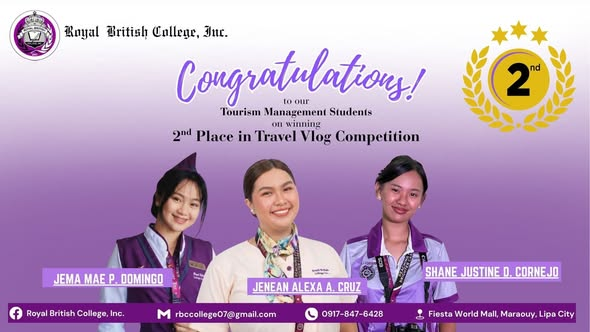
LIPA CITY, Philippines – Royal British College, Inc. celebrated the achievements of its Bachelor of Science in Tourism Management students at Tourism YCON 2026, organized by National University Laguna. The students secured second-place awards in three competition categories, demonstrating their creativity, skills, and knowledge in tourism-related activities. Their accomplishments brought recognition to the institution and highlighted the capabilities of its tourism students. The competitions provided opportunities for participants to demonstrate their talents in areas relevant to the tourism and hospitality industry. RBC extended its congratulations to the awardees, coaches, and mentors who supported their participation.
Tourism Management students celebrate their second-place finish in the Travel Vlog Competition at Tourism YCON 2026.
Joshua S. Parnaso earned second place in the Travel Photography competition. His achievement recognized his ability to capture travel-related subjects through photography. The category provided an opportunity for participants to communicate the appeal of destinations through visual storytelling. His placement demonstrated the value of creativity and visual communication in tourism promotion. The college recognized his accomplishment as a contribution to the institution’s success at the event.
RBC also earned second place in the FA Showmanship competition through the participation of Mark Justine L. Luza and Viah Paula D. Lachica. The category showcased performance skills and presentation abilities relevant to the tourism and aviation-related service environment. Their placement reflected their preparation, coordination, and confidence during the competition. These skills are important in developing professionals who can communicate effectively and deliver quality service. Their achievement added to the institution’s recognition at Tourism YCON 2026.

Royal British College Tourism Management students earn second place in FA Showmanship at Tourism YCON 2026.

The achievement supports Sustainable Development Goal 4: Quality Education by promoting applied learning and the development of student competencies. It also contributes to SDG 8: Decent Work and Economic Growth by strengthening skills relevant to future employment in tourism and hospitality. The use of photography and digital storytelling further reflects the role of innovation and creative communication in the sector. Participation in an event organized by another educational institution also encourages academic engagement and collaboration. These outcomes reinforce the importance of experiential learning in preparing future tourism professionals.
The three awards demonstrated the different competencies developed through tourism education. Photography encourages students to observe destinations and communicate their appeal through visual representation. Travel vlogging strengthens digital storytelling and the ability to present travel experiences to a wider audience. Showmanship, on the other hand, develops confidence, presentation, and performance skills. Together, these areas reflect the diverse abilities required in the tourism and hospitality sectors.
Joshua S. Parnaso earns second place in Travel Photography at Tourism YCON 2026.
Another second-place award was secured in the Travel Vlog competition by Jema Mae P. Domingo, Jenean Alexa A. Cruz, and Shane Justine D. Cornejo. The team demonstrated their ability to present travel experiences through video content. Travel vlogging combines destination presentation, storytelling, and digital communication to engage audiences. Their achievement reflected the importance of collaboration and creative production in promoting tourism destinations. It also highlighted the growing role of digital media in communicating travel information and experiences.
Participation in Tourism YCON 2026 also gave students an opportunity to apply their classroom learning in a competitive setting. Events of this nature encourage students to improve their creativity, teamwork, and professional communication. They also expose participants to other students and institutions with shared interests in tourism. Through these experiences, students can recognize their strengths and identify areas for further development. Such opportunities help prepare them for the expectations of the tourism and hospitality industry.
Royal British College, Inc. congratulated Joshua Parnaso, Jema Mae Domingo, Jenean Alexa Cruz, Shane Justine Cornejo, Mark Justine Luza, and Viah Paula Lachica for their accomplishments. The college also acknowledged the coaches and mentors who guided the students throughout their preparation. Their combined efforts contributed to the institution’s recognition at Tourism YCON 2026. The three second-place finishes serve as an encouragement for other students to explore their abilities and participate in academic and skills-based competitions. RBC continues to celebrate student achievements that reflect dedication, creativity, and excellence.
❧ ✦ ☙
ROYAL BRITISH COLLEGE · CAMPUS NEWS · LIPA CITY
RBC Culinary Arts Students Achieve 100% Competency Rate in Cookery NC II Assessment
Certificate in Culinary Arts students of Royal British College, Inc. celebrate their 100% competency rate in the Cookery NC II Assessment.
LIPA CITY, Philippines – Royal British College, Inc. proudly announced that its Certificate in Culinary Arts students achieved a 100% competency rate in the Cookery NC II Assessment. The accomplishment reflects the students’ successful demonstration of the competencies required in the assessment. It also highlights their preparation and commitment to developing practical culinary skills. The result marks an important achievement for the students and the institution’s technical-vocational education programs. RBC recognized the accomplishment as a testament to the students’ dedication to their chosen field.
The achievement reflects the effort students invested in developing their culinary knowledge and skills. Practical training allows learners to become familiar with food preparation techniques and the proper use of kitchen equipment. It also encourages them to observe food safety and sanitation practices during kitchen operations. These competencies are essential in maintaining quality and professionalism in food service establishments. The students’ result demonstrates their readiness to apply their training in relevant workplace settings.
The 100% competency rate also highlights the value of competency-based assessment in technical-vocational education. Such assessments provide a means of determining whether learners can perform specific tasks according to established standards. They help students identify the skills they have developed and demonstrate their readiness for professional responsibilities. For educational institutions, the results provide an indication of how effectively students have acquired the required competencies. This accomplishment further encourages learners to pursue additional training and professional development.

The Cookery NC II Assessment evaluates the practical competencies associated with food preparation and cookery operations. It provides candidates with an opportunity to demonstrate their ability to perform tasks based on established industry standards. For culinary students, the assessment serves as an important step in validating their technical knowledge and practical abilities. It also reinforces the importance of accuracy, proper procedures, and consistency in food preparation. Achieving a 100% competency rate indicates that all participating students met the required assessment standards.
The achievement supports Sustainable Development Goal 4: Quality Education through skills-based learning and competency development. It is also aligned with SDG 8: Decent Work and Economic Growth by helping prepare learners for employment opportunities in the culinary and hospitality sectors. Technical-vocational education plays an important role in developing practical abilities that respond to workplace requirements. The assessment result reflects the value of accessible and industry-relevant training. Through its culinary program, RBC continues to support the development of skilled and career-ready graduates.
The Certificate in Culinary Arts program provides students with opportunities to develop skills applicable to the food service and hospitality industries. Through practical learning activities, students become familiar with the responsibilities involved in professional kitchen environments. Their training also emphasizes discipline, time management, teamwork, and attention to detail. These qualities contribute to efficient kitchen operations and consistent service delivery. The assessment achievement reflects the importance of combining technical instruction with hands-on experience.


Royal British College, Inc. congratulated its Certificate in Culinary Arts students for their successful performance in the Cookery NC II Assessment. Their 100% competency rate represents a meaningful accomplishment in their culinary education journey. The college also recognized the dedication and preparation that contributed to this result. As they move forward, the students are encouraged to continue refining their skills and pursuing opportunities for professional growth. RBC celebrates its future culinary professionals and their commitment to excellence in the industry.
❧ ✦ ☙
Campus & Community
Lipa City, Batangas · May 23, 2026
RBC Students Represent the Institution at Lipa City's Flores de Mayo Celebration

LIPA CITY, Philippines – Royal British College, Inc. took part in the Flores de Mayo celebration held on May 23, 2026, at Plaza Independencia in Lipa City, Batangas. With the theme “Sagala Alay Kay Maria,” the celebration brought together participants in an expression of faith, culture, and devotion to the Blessed Virgin Mary. Representing the institution were Sheena H. Berbasa and Emmanuel N. Teves, fourth-year Bachelor of Science in Tourism Management students. Their participation highlighted the involvement of RBC students in cultural and community celebrations. The college expressed pride in their representation throughout the occasion.
Royal British College representatives and organizers gather on stage during the Flores de Mayo celebration, “Sagala Alay Kay Maria.”
Flores de Mayo is a traditional Filipino religious celebration held in honor of the Blessed Virgin Mary. It is commonly observed through community gatherings, devotional activities, and cultural presentations. The celebration provides an opportunity for communities to express their faith while preserving traditions passed down through generations. In Lipa City, the event also serves as a venue for local participation and cultural expression. The theme “Sagala Alay Kay Maria” emphasized the devotional character of the occasion.

The activity supports Sustainable Development Goal 4: Quality Education by providing students with opportunities for learning through community participation. It is also connected to SDG 11: Sustainable Cities and Communities, particularly the preservation of cultural heritage and local traditions. SDG 17: Partnerships for the Goals is reflected in the participation of educational institutions and community stakeholders in shared activities. These connections demonstrate how cultural celebrations can contribute to education and community engagement. RBC's involvement reflects its support for activities that recognize local identity and heritage.
Participants and Royal British College representatives gather around the flower-covered arch during the Flores de Mayo celebration.
The event highlighted the importance of preserving local traditions and strengthening community identity. Religious and cultural celebrations provide opportunities for people to come together through shared practices and values. They also help younger generations become more familiar with traditions that contribute to the country's cultural heritage. For tourism students, participating in such events can deepen their understanding of cultural practices and community-based activities. These experiences are relevant to the study of heritage, events, and destination development.


Sheena H. Berbasa and Emmanuel N. Teves represent Royal British College beneath the floral arch during Flores de Mayo.
Sheena H. Berbasa and Emmanuel N. Teves represented Royal British College during the celebration. As fourth-year Tourism Management students, their participation reflected the connection between tourism education and cultural awareness. Their involvement also demonstrated the role of students in representing their educational institutions during community events. They joined the celebration with confidence and respect for its religious and cultural significance. Their participation brought recognition to the institution and its tourism program.
The participation of RBC students also reflected the value of experiential learning beyond the classroom. Tourism education involves understanding not only destinations and services but also the cultural contexts that shape visitor experiences. Exposure to local celebrations allows students to observe how communities organize and sustain meaningful traditions. It also encourages respect for cultural and religious practices. Such engagement helps develop the cultural sensitivity expected of future tourism professionals.
Flores de Mayo participants and Royal British College representatives walk through the streets of Lipa City.
Royal British College, Inc. commended Sheena H. Berbasa and Emmanuel N. Teves for representing the institution at the Flores de Mayo celebration. Their participation demonstrated respect for faith, culture, and community traditions. The college recognized the value of students taking part in events that promote cultural understanding and local identity. Their involvement also reflected the importance of connecting academic learning with real-world community experiences. Through such participation, RBC continues to encourage students to represent the institution with pride and responsibility.

Spectators watch as Royal British College representatives walk with the floral arch during the Flores de Mayo celebration.
❧ ✦ ☙
LIPA CITY, PHILIPPINES
Buwan ng Panitikan 2026 Edition
APRIL 29–30, 2026
RBC Students Celebrate Filipino Literature and Cultural Heritage During Buwan ng Panitikan 2026
Theme: “Bekët (Bigkis) Panitikan: Para sa Katwiran at Kalikasan”

LIPA CITY, Philippines – Students of Royal British College, Inc. joined the celebration of Buwan ng Panitikan 2026 held on April 29–30, 2026. The event carried the theme “Bekët (Bigkis) Panitikan: Para sa Katwiran at Kalikasan,” highlighting the connection between literature, social responsibility, and environmental awareness. Through various cultural presentations and creative activities, participants explored the role of literature in expressing Filipino identity and shared values. The celebration provided students with opportunities to appreciate the country's literary and cultural heritage. It also emphasized the importance of using creative expression to promote meaningful social concerns.
Royal British College students in vibrant costumes gather for Buwan ng Panitikan 2026.
The theme underscored literature as a unifying force that connects people through stories, ideas, and shared experiences. It also encouraged participants to reflect on the relationship between reason, justice, and environmental responsibility. Literature can serve as a platform for examining social realities and communicating concerns that affect communities. Through written and performed works, people can express perspectives that encourage awareness and reflection. The celebration demonstrated how literary activities can extend beyond reading and writing.
Buwan ng Panitikan 2026 supports Sustainable Development Goal 4: Quality Education by promoting literacy, cultural awareness, and creative learning. It is also aligned with SDG 11: Sustainable Cities and Communities through the appreciation and preservation of cultural heritage. The focus on environmental responsibility connects the celebration to SDG 13: Climate Action. These goals reflect the role of literature and the arts in encouraging informed and responsible communities. RBC's participation reinforced the value of integrating cultural appreciation and social awareness into student development.

Performers in traditional-inspired costumes with woven hats.
Royal British College, Inc. recognized the participation of its students in this meaningful celebration. Their involvement demonstrated the importance of engaging with Filipino literature, history, and cultural expression. The event provided an opportunity to strengthen appreciation for the stories and traditions that contribute to national identity. It also reminded participants that literature can serve as a bridge between creativity, social responsibility, and environmental awareness. Through activities such as Buwan ng Panitikan, RBC continues to encourage students to value culture and contribute to its preservation.

Royal British College students in colorful, feathered festival costumes pose for a celebratory cultural event photo.
RBC students participated in activities that brought together literature, music, and cultural performances. These presentations featured expressions of traditions and cultural practices from different parts of the Philippines. The performances allowed students to encounter the country's diverse cultural identities through creative interpretation. They also demonstrated how artistic expression can communicate stories and preserve cultural memory. The activities made the celebration an opportunity for both appreciation and active participation.

Royal British College students in colorful festival costumes take part in a celebratory cultural parade outdoors.
The event emphasized the importance of recognizing the country's diverse cultural heritage. Literature and the performing arts provide ways to preserve stories, traditions, and perspectives across generations. They also help students understand how language and creative expression shape individual and collective identity. Through exposure to different cultural presentations, participants gained opportunities to appreciate the richness of Filipino traditions. This understanding supports the continued recognition and preservation of the nation's cultural resources.
The celebration also connected literary expression with social and environmental responsibility. The theme encouraged participants to consider how creative works can promote justice and concern for the natural environment. Literature can communicate the consequences of social and environmental issues in ways that encourage public reflection. Cultural activities can further strengthen this message by bringing communities together through shared experiences. The event therefore demonstrated the relevance of literature in discussions about both society and the environment.

Students in patterned costumes and feathered headdresses celebrate Filipino cultural heritage during Buwan ng Panitikan 2026.

Royal British College students and participants hold certificates during the Buwan ng Panitikan 2026 celebration.
❧ ✦ ☙
ROYAL BRITISH COLLEGE • CAMPUS TO COAST • ON-THE-JOB TRAINING • LIPA CITY, PHILIPPINES
RBC Students Complete On-the-Job Training Aboard MV 2GO MASIKAP

A view of the MV 2GO MASIKAP passenger vessel, where Royal British College students completed their On-the-Job Training.
LIPA CITY, Philippines – Royal British College, Inc. celebrated the successful completion of its students’ On-the-Job Training aboard the MV 2GO MASIKAP. The training provided students with practical exposure to the maritime and hospitality industry. Through their placement aboard the vessel, they gained opportunities to apply classroom learning in an actual work environment. The experience allowed them to become familiar with professional responsibilities and workplace expectations. Their completion of the training marked an important milestone in their preparation for future careers.
The training aboard MV 2GO MASIKAP also highlighted the connection between tourism, hospitality, and maritime operations. Passenger vessels require coordinated services to support the needs and safety of travelers. Students entering these industries must understand the importance of service quality, teamwork, and professional responsibility. Exposure to this environment can help them recognize how different operational roles contribute to the overall passenger experience. It also provides practical context for the concepts discussed in their academic programs.
On-the-Job Training is an important component of career-oriented education because it connects academic instruction with actual workplace experience. It allows students to observe industry operations and understand how professional responsibilities are carried out. Training aboard a passenger vessel also exposes learners to the working environment of the maritime and hospitality sectors. These settings require coordination, discipline, adaptability, and attention to service standards. Through this experience, students gained a clearer understanding of the demands of industry-based work.


Royal British College trainees and staff gather aboard the MV 2GO MASIKAP after completing their On-the-Job Training.
The completion of the training reflects the importance of industry exposure in preparing students for their chosen careers. Through hands-on learning, students can strengthen their practical abilities and identify areas for further improvement. Workplace experiences also help develop professional discipline, communication, and adaptability. These competencies are essential in industries where service delivery and operational coordination are important. The training therefore served as an opportunity for students to connect their education with professional practice.
Royal British College trainees and staff gather aboard the vessel during their On-the-Job Training.

During their training, students were exposed to practical experiences beyond the traditional classroom setting. They had opportunities to observe workplace procedures and become familiar with professional conduct in an operational environment. Such exposure helps learners understand the importance of following instructions and working effectively with others. It also allows them to develop confidence as they adjust to actual industry settings. These experiences contribute to their readiness for future employment.

Three Royal British College instructors pose aboard the vessel during the students’ On-the-Job Training.
The initiative supports Sustainable Development Goal 4: Quality Education by providing students with practical and career-oriented learning opportunities. It also contributes to SDG 8: Decent Work and Economic Growth by helping learners develop competencies relevant to employment. The industry placement reflects the importance of cooperation between educational institutions and industry partners in preparing future professionals. Such collaboration can help align student training with actual workplace expectations. Through its OJT opportunities, RBC continues to promote skills development and career readiness.
Royal British College trainees and staff display certificates aboard the MV 2GO MASIKAP after completing their On-the-Job Training.
Royal British College, Inc. congratulated its students for successfully completing their On-the-Job Training aboard MV 2GO MASIKAP. Their accomplishment represents the effort they invested in gaining practical experience and preparing for their professional journeys. The college recognizes the importance of providing learning opportunities that extend beyond the classroom. It remains committed to helping students develop the knowledge, skills, and confidence required in their chosen fields. Their training experience stands as another step toward becoming capable and industry-ready professionals.

Royal British College trainees and staff gather aboard the MV 2GO MASIKAP during On-the-Job Training.
❧ ✦ ☙